
 English
 Español
 Pусский
 Deutsch
 日本語
日本語 हिन्दी
 Indonesia
 Melayu
 Tiếng Việt
광화학 반응기 시스템
A photochemical reactor system is a specialized piece of equipment designed to carry out chemical reactions under controlled light irradiation. It uses light as a driving force to initiate or accelerate transformations that may be difficult or inefficient under conventional thermal conditions. By precisely controlling light intensity, wavelength, temperature, mixing, and residence time, such a system supports highly selective and reproducible reactions in both research and industrial settings.The core function of a photochemical reactor is to expose reactants to a defined light source, often in the ultraviolet, visible, or near-infrared range. Depending on the reaction mechanism, light can activate a catalyst, promote the formation of reactive intermediates, or directly excite a substrate into a more reactive state. This makes photochemical technology valuable for a wide range of applications, including organic synthesis, polymerization, environmental treatment, and pharmaceutical development.A typical photochemical reactor system consists of several important components. The light source may be LED-based, mercury-based, xenon-based, or another type selected according to the desired wavelength. The reaction vessel is usually made from materials that allow efficient transmission of light while maintaining chemical resistance and thermal stability. Cooling or heating modules help maintain a constant reaction temperature, since light irradiation can generate heat and affect reaction performance. In many systems, stirring or flow-control units are also included to ensure uniform exposure of the reaction mixture to light.Photochemical reactors can be designed as batch systems or continuous flow systems. Batch reactors are suitable for laboratory-scale experiments and small production runs, allowing users to easily change reaction conditions. Continuous flow reactors are often preferred for larger-scale work because they provide better light penetration, improved heat dissipation, shorter reaction times, and enhanced safety when handling energetic or sensitive intermediates. Flow systems also offer excellent process control and scalability, making them attractive for modern chemical manufacturing.One of the major advantages of a photochemical reactor system is its ability to improve reaction efficiency and selectivity. Many light-driven reactions proceed under milder conditions than traditional methods, reducing energy consumption and minimizing side reactions. This can lead to higher product purity, lower waste generation, and more sustainable chemical processes. In addition, photochemical methods can enable unique transformations that are difficult to achieve using only heat or pressure.Safety is another important consideration in the design of photochemical reactor systems. Proper shielding is often required to protect users from exposure to intense light, especially ultraviolet radiation. Ventilation, pressure control, and temperature monitoring help reduce risks associated with reactive or volatile substances. Modern systems are often equipped with sensors and automated controls to maintain stable operating conditions and prevent accidents.Overall, a photochemical reactor system is an advanced tool that combines light, engineering, and chemistry to enable precise reaction control. Its versatility, efficiency, and environmental advantages make it an essential platform for innovation in laboratory research and industrial production.
제품
범주:
-
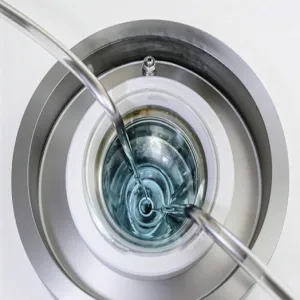
낙하막(상승막) 광화학 반응기
분류: 낙하막 광화학 반응기조회수: 908번호:릴리스 시간: 2026-07-09 15:56:06높은 램프 출력과 최대 5000L+의 반응량을 갖춘 상승/하강 필름 반응기 설계를 사용하여 대규모 연속 광화학 생산을 위해 설계되었습니다. 엄격한 산업 등급 광화학 합성 요구 사항을 충족하는 지능형 제어 시스템을 갖추고 있습니다.
뉴스
범주:
-
[Blog]광촉매 반응기 광원 최적화 가이드
2026-08-03 03:06:27 -
[Blog]Photochemical Chlorination Reactor Working Principle
2026-08-19 03:35:03 -
[Blog]Laboratory Photochemical Reactor Selection Criteria
2026-08-22 03:04:53
케이스
범주:
검색 결과가 없습니다!
비디오
범주:
검색 결과가 없습니다!
다운로드
범주:
검색 결과가 없습니다!
모집
범주:
검색 결과가 없습니다!



 왓츠앱
왓츠앱 핸드폰
핸드폰