
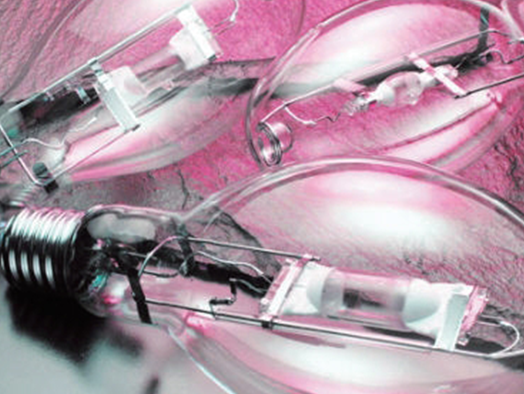
A photochemical reactor for photochemical oxidation reactions is a specialized processing system designed to use light energy, usually from ultraviolet or visible light sources, to trigger and control oxidation chemistry. These reactors are widely used in laboratory research, pilot plants, and industrial production where precise control of reaction conditions is required. By combining light, oxygen or other oxidants, and a controlled reaction environment, a photochemical reactor enables efficient and selective oxidation pathways that may be difficult to achieve through conventional thermal methods.
In modern chemical processing, photochemical oxidation reactions are increasingly important because they support cleaner synthesis routes, improved reaction selectivity, lower thermal load, and better energy efficiency in many applications. Industries and research teams use photochemical reactors for compound oxidation, pollutant degradation, synthesis of intermediates, advanced materials processing, and environmental treatment. As demand grows for sustainable chemistry and scalable light-driven processing, understanding the structure, working principle, advantages, and technical specifications of a photochemical reactor becomes essential.
A photochemical reactor is a controlled reaction vessel that exposes chemical mixtures to light of a defined wavelength and intensity. The purpose is to initiate or accelerate photochemical transformations through photon absorption. In the case of photochemical oxidation reactions, the reactor is designed to facilitate oxidation processes by enabling the interaction between light, a photosensitizer or catalyst when needed, and an oxidizing agent such as oxygen, ozone, hydrogen peroxide, or another oxidant.
The reactor typically includes a light source, reaction chamber, temperature control system, mixing system, gas delivery or sparging arrangement, and monitoring components. Depending on the application, the design may be batch, semi-batch, or continuous flow. Each configuration influences residence time, mass transfer, light penetration, and reaction efficiency. The reactor’s geometry and material selection are especially important because they affect photon distribution, chemical resistance, and scale-up performance.
Photochemical oxidation reactions are chemical transformations in which light energy initiates or supports oxidation of a substance. Oxidation may occur directly when the substrate absorbs light and reacts with oxygen, or indirectly when a photoactive catalyst generates reactive species such as singlet oxygen, radicals, or excited-state intermediates. These reactive species then attack target molecules, changing their chemical structure.
Photochemical oxidation is used in organic synthesis, wastewater treatment, atmospheric chemistry research, disinfection, material surface modification, and pharmaceutical intermediate production. Compared with purely thermal oxidation, photochemical oxidation often offers milder operating temperatures, better reaction control, and alternative pathways that may reduce side reactions or over-oxidation.
The working principle of a photochemical reactor for photochemical oxidation reactions is based on controlled photon delivery. Light passes through the reactor window or transparent vessel wall and is absorbed by reactants, catalysts, or sensitizers. Once activated, these species generate oxidizing intermediates or directly react with oxygen and other oxidants. The oxidation process continues under controlled mixing, temperature, and gas transfer conditions until the desired conversion is achieved.
In a typical operation sequence, the reactants are charged into the reactor, the oxidant or oxygen is introduced, and the light source is activated. The reaction mixture is stirred or pumped to maximize uniform exposure. Some systems operate under ambient pressure, while others use elevated pressure to improve oxygen solubility and mass transfer. Sensors may monitor temperature, pressure, flow rate, and sometimes reaction progress through inline analytical tools.
A photochemical reactor is more than a reaction vessel. It is an integrated system built to maintain stable and reproducible oxidation conditions. The most common components include:
| Component | Main Function | Importance in Oxidation Reactions |
|---|---|---|
| Light source | Provides UV or visible photons | Drives photochemical activation and reaction initiation |
| Reactor vessel | Contains the reaction mixture | Ensures chemical compatibility and light transmission |
| Optical window or transparent wall | Allows light to reach the reaction zone | Improves photon efficiency and uniform exposure |
| Mixing system | Promotes homogeneous dispersion | Improves oxygen transfer and reaction consistency |
| Temperature control unit | Manages heat generated by the light source and reaction | Prevents overheating and improves selectivity |
| Gas inlet or sparger | Introduces oxygen or other gases | Supports oxidation chemistry and mass transfer |
| Sensors and controls | Monitor operating conditions | Improves process safety and repeatability |
| Cooling jacket or heat exchanger | Removes excess heat | Stabilizes reaction temperature during continuous operation |
The use of a photochemical reactor for photochemical oxidation reactions offers several important process advantages. First, it allows precise control of light exposure, which is essential for consistent oxidation rates. Second, it can reduce the need for high temperatures, helping to limit unwanted byproducts and degradation. Third, the reactor design improves safety by containing reactive gases and controlling the generation of reactive intermediates.
Another major advantage is improved reaction selectivity. Many oxidation reactions become more efficient when driven by light because the activation step can be tuned through wavelength selection, intensity control, and catalyst choice. This makes it possible to optimize conversion without excessive heat or harsh chemical conditions. In addition, many photochemical oxidation reactions can be adapted to continuous flow processing, which supports better scale-up, higher productivity, and more stable quality.
| Advantage | Description | Typical Benefit for Oxidation Processes |
|---|---|---|
| Controlled light delivery | Ensures uniform photon exposure | Improves conversion and repeatability |
| Lower thermal load | Reduces reliance on heat-driven chemistry | Limits decomposition and side reactions |
| Better selectivity | Supports targeted oxidation pathways | Enhances product purity |
| Improved safety | Closed system with controlled oxidant handling | Reduces exposure to reactive species |
| Scalability | Can be designed from lab to industrial scale | Supports process development and production |
| Energy efficiency | Uses photons as the primary activation source | Can reduce energy consumption in suitable reactions |
| Green chemistry potential | May use oxygen, light, and mild conditions | Supports more sustainable oxidation routes |
Photochemical reactors are available in several design types, each suited to different oxidation needs. The choice depends on reaction scale, optical properties, heat transfer requirements, and desired throughput.
| Reactor Type | Structure | Typical Use | Key Feature |
|---|---|---|---|
| Batch photochemical reactor | Closed vessel with fixed charge | Research, formulation, small-scale synthesis | Simple operation and flexible conditions |
| Continuous flow photochemical reactor | Liquid passes through illuminated channels | Scale-up and production | High surface-area-to-volume ratio |
| Annular reactor | Light source positioned inside or outside a cylindrical chamber | Uniform irradiation studies | Good light distribution |
| Tube reactor | Narrow transparent tubing or channel | Flow oxidation and screening | Efficient photon penetration |
| Stirred tank reactor | Mixed vessel with external or internal lighting | General oxidation processing | Strong mixing capability |
| Microreactor | Miniaturized flow system with fine channels | Fast kinetics and process development | Excellent control of heat and mass transfer |
Material selection is critical in a photochemical reactor for photochemical oxidation reactions because the system must withstand oxidizing agents, light exposure, and sometimes aggressive solvents. Quartz is commonly used for UV-transmitting components because of its excellent optical properties. Borosilicate glass is also widely used for many applications requiring moderate chemical resistance and good transparency in selected wavelength ranges.
For metal components, stainless steel is often selected for mechanical strength and corrosion resistance. Internal seals, gaskets, and tubing may be made from PTFE, FEP, PFA, or other chemically resistant polymers. The best material combination depends on the oxidant, solvent, wavelength range, pressure rating, and cleaning requirements. In industrial systems, material compatibility is especially important for long service life and safe operation.
The technical specifications of a photochemical reactor vary by design and application. However, the table below summarizes common specification parameters found in many photochemical reactor systems used for oxidation reactions.
| Specification Item | Typical Range or Value | Notes |
|---|---|---|
| Light wavelength | UV to visible range | Selected according to substrate and catalyst absorption |
| Light source power | Low to high power depending on scale | Impacts reaction rate and energy use |
| Reactor volume | Milliliters to thousands of liters | Depends on lab, pilot, or industrial use |
| Operating temperature | Ambient to controlled elevated range | Often cooled to maintain selectivity |
| Operating pressure | Atmospheric to pressurized | Pressure can improve oxygen solubility |
| Mixing method | Magnetic stirring, mechanical stirring, or flow-induced mixing | Supports uniform irradiance and mass transfer |
| Construction material | Quartz, glass, stainless steel, fluoropolymer | Chosen for compatibility and optical needs |
| Process mode | Batch, semi-batch, or continuous | Affects throughput and control strategy |
| Automation level | Manual to fully automated | Enhances reproducibility and safety |
| Monitoring options | Temperature, pressure, flow, pH, spectroscopy | Useful for optimization and quality control |
Photochemical reactors for photochemical oxidation reactions are used across multiple industries. In chemical synthesis, they support the preparation of fine chemicals, intermediates, and specialty compounds. In environmental applications, they help degrade organic contaminants, dyes, and persistent pollutants. In pharmaceuticals, they are useful for oxidation steps that require precise control and minimized degradation. In materials science, photochemical oxidation may be used for surface treatment, polymer modification, and functionalization.
These reactors are also used in research settings to study reaction mechanisms, screen oxidants, compare catalyst performance, and optimize scale-up strategies. Because light-driven oxidation can be highly sensitive to reactor geometry and operating conditions, photochemical reactors are valuable tools for both development and production.
| Industry | Typical Use Case | Why Photochemical Oxidation Is Useful |
|---|---|---|
| Chemical manufacturing | Synthesis and oxidation of intermediates | Improves selectivity and process efficiency |
| Pharmaceuticals | Controlled oxidation steps in active ingredient processing | Supports cleaner transformations |
| Environmental treatment | Degradation of pollutants and wastewater contaminants | Generates strong oxidizing species |
| Materials and polymers | Surface oxidation and functionalization | Enhances surface properties |
| Food and fragrance | Selective conversion of aroma or flavor precursors | Can support mild processing |
| Research laboratories | Kinetic studies and process development | Offers flexible reaction control |
Several variables influence the performance of a photochemical reactor for photochemical oxidation reactions. Light penetration is one of the most important factors because photons must reach the active reaction zone. If the mixture is too concentrated or too opaque, the reaction may become limited by poor irradiation. Mixing intensity also matters because it improves uniform exposure and brings reactants into contact with oxygen or other oxidants.
Temperature control is another critical factor. Many photochemical oxidation reactions are exothermic or produce heat from the light source, so efficient cooling is needed to maintain stable reaction conditions. The choice of oxidant, catalyst, pH, solvent, and residence time can also significantly affect conversion and selectivity. In continuous systems, flow rate and channel design strongly influence residence time distribution and overall output.
When designing a photochemical reactor for oxidation reactions, engineers and chemists must consider the optical path length, reactor volume, target wavelength, and expected reaction kinetics. Shorter path lengths often improve light penetration, especially for concentrated solutions. High surface-area designs are generally preferred for scale-up because they improve irradiation efficiency.
Safety is also central to reactor design. Oxidation reactions can involve reactive oxygen species, flammable solvents, or pressurized gases. Therefore, the reactor should include proper venting, pressure relief, interlocks, temperature limits, and material compatibility checks. Process developers often use pilot testing to determine whether a batch or continuous configuration provides the best balance of productivity, selectivity, and operational safety.
Photochemical reactors are especially useful during process development because they allow rapid parameter screening. Researchers can compare different wavelengths, oxidants, catalyst loads, temperatures, and concentrations to identify optimal conditions. This flexibility shortens development cycles and supports efficient transition from bench-scale experiments to larger production systems.
Another important advantage is process reproducibility. Because light-driven reactions can be very sensitive to geometry and irradiation intensity, using a controlled reactor system helps standardize results. This is particularly important in industries where product quality must remain consistent over time. Continuous photochemical oxidation reactors also make it easier to maintain steady-state conditions, which is often beneficial for manufacturing.
| Feature | Batch Reactor | Continuous Reactor |
|---|---|---|
| Operation style | Fixed charge processed in one vessel | Material flows through illuminated system |
| Flexibility | High for testing and small runs | High for stable, repeated production |
| Heat management | Moderate to good depending on design | Often excellent due to small channel dimensions |
| Scale-up | May require larger vessels or repeated batches | Often easier through numbering-up or flow increase |
| Product consistency | Depends on batch control | Usually strong once stabilized |
| Typical use | Research, screening, specialty synthesis | Production, development, continuous processing |
For content optimization, related keyword phrases can be naturally included throughout the page. These phrases help search engines understand the topic and improve topical relevance. Examples include photochemical reactor, photochemical oxidation reactor, photochemical oxidation reactions, UV photochemical reactor, continuous photochemical reactor, light-driven oxidation process, photocatalytic oxidation system, oxidation reactor design, photochemical process equipment, and industrial photochemical reactor.
When using these keywords, it is best to place them in headings, table labels, technical descriptions, and naturally written paragraphs. Overuse should still be avoided in favor of readability and topical depth. Search engines generally favor content that is comprehensive, structured, and useful to readers, especially for technical industry pages and blog articles.
Proper maintenance is essential for keeping a photochemical reactor operating reliably. Light sources should be inspected regularly because output intensity can decrease over time. Transparent surfaces must remain clean to preserve light transmission. Seals, pumps, cooling systems, and gas lines should also be checked frequently for leaks, wear, or clogging.
Safety measures should include protection against UV exposure, heat buildup, overpressure, and oxidant handling risks. Operators should use appropriate shielding, ventilation, personal protective equipment, and standard operating procedures. In many systems, automation and interlock functions are used to improve safe operation and reduce human error.
Choosing the right photochemical reactor for photochemical oxidation reactions depends on application goals, throughput needs, and chemistry requirements. For research and screening, a small batch system may be sufficient. For scale-up and consistent production, a continuous flow design is often preferred. If oxygen transfer is a key limiting factor, a design with strong mixing and efficient gas-liquid contact may be necessary.
The target wavelength, catalyst sensitivity, solvent transparency, and required temperature control should also guide the selection process. In addition, the system should be compatible with the oxidant and any reactive intermediates generated during the reaction. A well-matched reactor design improves efficiency, safety, and long-term performance.
A photochemical reactor for photochemical oxidation reactions is an advanced and versatile system that supports light-driven oxidation processes in research, pilot, and industrial settings. It combines controlled irradiation, precise temperature management, effective mixing, and safe oxidant handling to enable efficient chemical transformation. With advantages such as better selectivity, lower thermal stress, improved sustainability, and scalable design options, photochemical reactors play an increasingly important role in modern chemical processing.
Whether used for synthesis, environmental treatment, or materials development, the photochemical oxidation reactor remains a key enabling technology for industries seeking cleaner, more controlled, and more efficient reaction pathways. As demand continues to grow for advanced process equipment and greener manufacturing methods, photochemical reactor design will remain a high-value topic for technical content, product pages, and industry education.
```
추가하다:건물 7, Z Acer Z Hi 산업 단지, Lian Tang ave, shanghu 타운, C 행 번호, 장쑤성
전화:0512-65560736 / 0512-65371556
이동하는:+86 13584913897 / +86 13771738377 (판매)
이메일:jkzdhsm@yeah.net
이 웹사이트는 귀하가 당사 웹사이트에서 최상의 경험을 할 수 있도록 쿠키를 사용합니다.
 English
 Español
 Pусский
 Deutsch
 日本語
日本語 हिन्दी
 Indonesia
 Melayu
 Tiếng Việt



 왓츠앱
왓츠앱 핸드폰
핸드폰
논평
(0)