
Continuous flow photochemical reactors are increasingly used in modern chemical processing because they combine
light-driven reactions with controlled, continuous operation. For industries seeking safer, more scalable, and
more reproducible photochemistry, the continuous flow photochemical reactor safety advantages
are a major reason for adoption. Compared with batch photochemical systems, flow-based reactors can improve
temperature control, reduce hazardous inventory, limit operator exposure, and support more stable reaction
management. These benefits are especially important for processes involving UV light, reactive intermediates,
oxygen-sensitive chemistry, heat-generating transformations, or unstable compounds.
This page provides an SEO-friendly, industry-focused overview of the safety benefits, core definitions, common
operating principles, equipment characteristics, and practical design considerations related to continuous flow
photochemical reactors. It is written for use in blog posts, category pages, industry pages, and educational
resource sections. The content is generic and does not recommend any specific company, brand, or commercial
product.
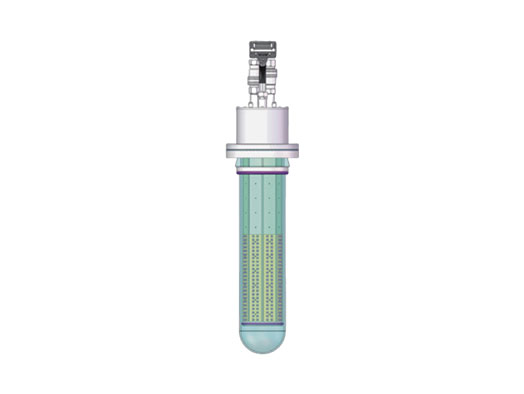
A continuous flow photochemical reactor is a reaction system in which liquid or gas-liquid reactants are
continuously pumped through a light-irradiated zone, where photochemical transformations occur under controlled
conditions. In most systems, the reactant stream passes through a transparent or semi-transparent channel,
tubing, microchannel, coil, or tubular reactor while being exposed to a defined light source such as UV, visible,
or near-UV LEDs.
Unlike batch reactors, where the full reaction volume is charged at once and irradiated in a single vessel,
continuous flow photochemical reactors process smaller amounts of material at any one time. This design allows
better heat removal, more uniform irradiation, and tighter control over reaction time, residence time, and
exposure intensity. These features directly contribute to the
continuous flow photochemical reactor safety advantages that are widely discussed in industrial
photochemistry.
Photochemical reactions can be highly useful, but they also introduce specific risks. Light energy can trigger
fast reaction rates, generate radicals, produce heat, or cause decomposition if not carefully controlled.
Some photochemical processes involve hazardous reagents, flammable solvents, oxidants, pressurized gases, or
unstable intermediates. In batch systems, these risks may become more difficult to manage because a large
volume of material is exposed at once.
Continuous flow technology addresses many of these issues by reducing the amount of material in the reactor,
improving temperature regulation, and enabling more precise control of irradiation. This is why the
continuous flow photochemical reactor safety advantages are considered a core benefit not only
for process performance but also for plant safety, laboratory safety, and operational reliability.
The main safety benefits of continuous flow photochemical reactors are closely related to the way the system
handles light exposure, reaction volume, heat, pressure, and process control. Below are the most important
advantages.
One of the strongest continuous flow photochemical reactor safety advantages is the reduced hold-up volume.
In a flow reactor, only a small amount of reaction mixture is present in the irradiated zone at any moment.
This lowers the consequences of an unexpected event such as thermal runaway, decomposition, over-irradiation,
or reagent incompatibility. By minimizing the quantity of hazardous material under active reaction conditions,
operators reduce the severity of potential incidents.
Photochemical reactions can generate heat, especially when reactions are fast or highly exothermic. In batch
vessels, heat accumulation may occur in the bulk liquid, increasing the risk of side reactions or runaway
conditions. Continuous flow photochemical reactors typically offer a much higher surface-area-to-volume ratio,
which improves heat transfer and cooling efficiency. Better temperature control is a major safety benefit
because it helps stabilize reaction behavior and reduces the chance of overheating.
In batch photochemistry, light penetration can be uneven, especially in deeper or larger vessels. Uneven
irradiation may cause hot spots, localized decomposition, or incomplete conversion. Continuous flow systems
generally provide a thin irradiation path or narrow channel geometry, allowing more uniform exposure to light.
Consistent irradiation helps prevent overreaction in one region while other regions remain under-irradiated.
This uniformity supports safer and more predictable operation.
Flow processing can reduce direct operator interaction with reactive mixtures, UV sources, and hazardous
chemicals. Once the system is set up, the reaction proceeds inside a closed or semi-closed pathway, limiting
manual handling. This is especially valuable for substances that are toxic, irritating, volatile, or
photo-sensitive. Lower operator exposure is a practical safety advantage that also supports better occupational
health and process discipline.
Residence time is a critical factor in photochemical reactions. Too little exposure may lead to incomplete
conversion, while too much exposure can cause degradation or unwanted side reactions. Continuous flow reactors
allow precise control of residence time through flow rate management and channel design. This control helps
prevent excessive irradiation and supports safer process windows.
Many photochemical transformations proceed through short-lived reactive intermediates such as radicals,
excited states, singlet oxygen, or carbenes. Continuous flow systems can improve containment by generating and
consuming intermediates in situ, often in a smaller and more controlled reaction zone. This reduces the chance
that unstable species accumulate in bulk and create hazardous conditions.
Scale-up in photochemistry can be challenging because light distribution and heat removal become harder in larger
vessels. Continuous flow reactors often scale by numbering up or extending operating time rather than increasing
vessel size dramatically. This approach can be safer because the reaction environment remains controlled and
repeatable, rather than relying on a much larger batch volume. The safer scale-up profile is one of the most
frequently cited continuous flow photochemical reactor safety advantages.
A thermal runaway event occurs when heat generation exceeds heat removal, causing temperature to rise
uncontrollably. Continuous flow reactors are generally better suited to avoiding this risk because of their
small internal volume, efficient heat transfer, and rapid response to process changes. If a problem occurs,
the system can often be stopped quickly, and only a limited amount of material is affected.
Continuous flow photochemical reactors are often integrated with sensors, pumps, controls, and data monitoring
tools. Automation can improve safety by maintaining stable flow rates, detecting pressure changes, controlling
light intensity, and monitoring temperature in real time. Automated operation reduces human error and makes
it easier to keep the process inside defined safety limits.
When a batch reaction needs to be stopped, the entire vessel may still contain active or hazardous material.
In contrast, a flow system can often be interrupted more safely by stopping feed pumps, switching off light
sources, and flushing the reactor with a quench or inert stream. Because the internal volume is smaller, the
system can be brought to a safe state more efficiently.
| Safety Factor | Continuous Flow Photochemical Reactor | Batch Photochemical Reactor |
|---|---|---|
| Reaction volume | Small hold-up volume at any time | Large full-volume exposure |
| Heat removal | High heat-transfer efficiency | More difficult in larger vessels |
| Light penetration | Uniform irradiation in thin channels | Possible shading and uneven exposure |
| Operator exposure | Lower due to closed operation | Higher due to manual handling |
| Control of residence time | Precise and adjustable | More dependent on batch conditions |
| Risk of runaway | Lower due to small volume and better cooling | Higher if heat accumulates |
| Handling of unstable intermediates | Generated and consumed in situ | May accumulate in bulk |
| Scale-up approach | Safer through continuous processing or numbering up | May require much larger reactors |
The continuous flow photochemical reactor safety advantages depend on several design features.
While specific configurations vary, the following elements are commonly associated with safer operation.
| Design Feature | Safety Function | Typical Benefit |
|---|---|---|
| Narrow channel or tubing geometry | Improves light penetration and heat transfer | More uniform reaction conditions |
| Closed-loop or enclosed system | Limits exposure to chemicals and light | Better containment |
| Temperature control module | Removes excess heat | Reduced thermal risk |
| Pressure regulation | Keeps flow stable and avoids pressure spikes | Safer continuous operation |
| LED or low-heat light source | Delivers targeted irradiation | Lower heat load and longer service life |
| Inline sensors | Track temperature, flow, pressure, or conversion | Early warning for abnormal conditions |
| Automated pump control | Maintains flow consistency | Lower risk of residence-time variation |
| Modular reactor architecture | Supports easier maintenance and adaptation | Reduced downtime and safer changes |
A safe photochemical process is not defined by reactor type alone. Operating parameters also play a major role.
The table below summarizes typical parameter categories that are often monitored in continuous flow
photochemical processing.
| Parameter | Safety Relevance | General Consideration |
|---|---|---|
| Flow rate | Controls residence time and exposure | Must remain stable for consistent conversion |
| Light intensity | Affects reaction speed and heat generation | Should match the process window |
| Wavelength | Determines which species absorb energy | Should be selected to avoid unnecessary side reactions |
| Temperature | Controls kinetics and stability | Requires continuous monitoring |
| Pressure | Important for gas-liquid systems and fluid stability | Should remain within equipment limits |
| Solvent choice | Affects flammability, compatibility, and absorption | Should support safe light-driven chemistry |
| Concentration | Influences reaction rate and heat release | Higher concentration may increase hazard if uncontrolled |
| Mixing efficiency | Prevents localized overexposure | Supports uniform reaction behavior |
Continuous flow photochemical reactors are used in many application areas where safer reaction handling is
important. The following examples are generic and widely applicable across chemical industries.
In each of these applications, the continuous flow platform can improve handling of hazardous chemistry by
limiting material inventory, increasing process predictability, and supporting controlled light exposure.
In day-to-day use, the safety advantages of continuous flow photochemical reactors extend beyond theoretical
design benefits. Operators often notice improved consistency during startup, less sensitivity to scale,
faster stabilization after parameter changes, and fewer problems caused by uneven irradiation. When properly
configured, the system can maintain a narrower safety window and reduce the variability commonly seen in
large batch photochemical vessels.
For example, if a reaction becomes too warm or conversion begins to drift, the process can often be corrected
by adjusting the flow rate, cooling conditions, or light intensity. Because only a small amount of material
is present in the reactor at once, corrective actions can be made before a large safety issue develops.
This makes continuous flow a strong fit for process chemists and engineers who prioritize both performance and
hazard reduction.
| Feature | Yes / No Check | Why It Matters |
|---|---|---|
| Closed or enclosed irradiation path | Yes | Reduces exposure to UV or reactive vapors |
| Small internal reaction volume | Yes | Limits hazard inventory |
| Active cooling or thermal regulation | Yes | Prevents overheating |
| Stable pump-driven flow | Yes | Maintains residence time and consistency |
| Pressure relief or pressure monitoring | Yes | Improves system control and protection |
| Inline process monitoring | Recommended | Detects deviations before escalation |
| Light shielding or enclosure | Yes | Protects personnel from exposure |
| Compatible materials of construction | Yes | Prevents degradation and leaks |
Material compatibility is an important part of continuous flow photochemical reactor safety. Reactor components
must tolerate the solvent system, reactants, oxidizing or reducing conditions, and light intensity used in the
process. Common engineering materials may include chemically resistant polymers, glass, stainless steel,
fluoropolymer tubing, or hybrid structures depending on wavelength, pressure, and chemical environment.
From a safety perspective, the key requirement is that the materials should resist leakage, degradation,
embrittlement, and unwanted light absorption. Poor material selection can undermine the advantages of a flow
system by causing failure points, contamination, or pressure instability. Therefore, safe photochemical reactor
design always involves compatibility analysis before operation.
Although continuous flow photochemical reactors offer important safety advantages, safe operation still depends
on sound engineering practice and process discipline. The following best practices are commonly recommended
across the industry:
| Specification Category | Typical Range / Description | Safety Significance |
|---|---|---|
| Reaction channel size | Narrow tubing, microchannel, or compact coil geometry | Improves light and heat transfer |
| Light source | UV, visible, or LED-based irradiation | Determines energy input and shielding needs |
| Operating mode | Continuous feed with controlled residence time | Reduces batch exposure risk |
| Cooling method | Air, liquid, jacketed, or external thermal control | Prevents heat buildup |
| Flow control | Pumps or metering systems | Stabilizes process conditions |
| System enclosure | Open frame, shielded enclosure, or closed cabinet | Protects users from light exposure |
| Monitoring capability | Temperature, pressure, and flow monitoring | Supports safe operation and early detection |
| Scalability | Time-based scale-up or numbering up | Supports safer production expansion |
For content planning and search visibility, the following related keywords are often relevant to the subject
of continuous flow photochemical processing:
The continuous flow photochemical reactor safety advantages make this technology highly
attractive for modern photochemical processing. By reducing reaction volume, improving temperature control,
providing uniform irradiation, limiting operator exposure, and enabling precise residence-time management,
continuous flow systems create a safer and more controllable reaction environment than many traditional batch
approaches. These benefits are especially important when working with hazardous reagents, unstable intermediates,
exothermic reactions, or light-sensitive compounds.
For industries focused on process safety, reproducibility, and scalable photochemistry, continuous flow
photochemical reactors offer a strong technical foundation. When combined with proper monitoring, material
selection, and operating procedures, they support safer development and production across a broad range of
chemical applications.
```
If you want, I can also provide:
1. a more keyword-optimized version for Google ranking,
2. a shorter category-page version, or
3. a fully structured HTML page with meta title, meta description, FAQ schema-ready content.
추가하다:건물 7, Z Acer Z Hi 산업 단지, Lian Tang ave, shanghu 타운, C 행 번호, 장쑤성
전화:0512-65560736 / 0512-65371556
이동하는:+86 13584913897 / +86 13771738377 (판매)
이메일:jkzdhsm@yeah.net
이 웹사이트는 귀하가 당사 웹사이트에서 최상의 경험을 할 수 있도록 쿠키를 사용합니다.
 English
 Español
 Pусский
 Deutsch
 日本語
日本語 हिन्दी
 Indonesia
 Melayu
 Tiếng Việt



 왓츠앱
왓츠앱 핸드폰
핸드폰
논평
(0)